Human Stomach Cells Tweaked To Make Insulin
Transforming human stomach organoids into insulin-secreting cells shows promise as an innovative type 1 diabetes treatment approach.
Type 1 diabetes is caused by an insufficient production of the hormone insulin by cells in the pancreas called beta cells and is estimated to affect 9.5 million people worldwide. Low insulin levels allow glucose levels to remain elevated, which in the long term can damage organs such as the kidneys, the eyes, and the cardiovascular system. People with diabetes require lifelong monitoring of blood sugar levels coupled with insulin injections to keep blood sugar levels at a stable, healthy level.
A potential new treatment option for those patients is the replacement of lost or dysfunctional pancreatic beta cells, either by cell transplantation, or by the generation of new beta cells from existing cells within the body. This latter strategy was pursued by the team of Xiaofeng Huang from Weill Cornell Medicine, USA and Qing Xia from Peking University, China, who previously discovered that cells in the mouse stomach can be transformed into pancreatic beta cells by genetic engineering.
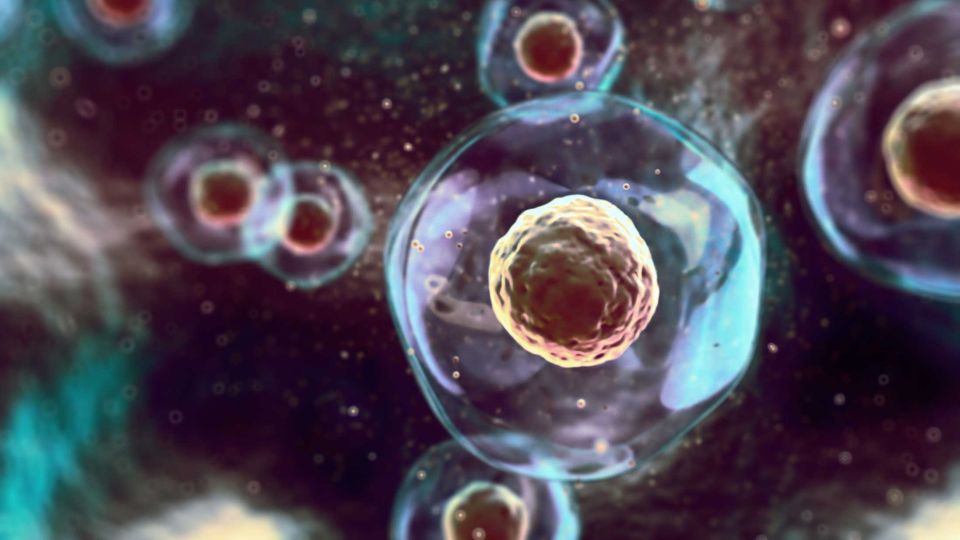
In their work published in the journal Stem Cell Reports, the researchers now tested if the same can be done with the human stomach within the body. To test this, the researchers started off by making human stomach organoids, microscopic structures that model aspects of normal stomach function. The stomach organoids were genetically engineered so that they could be transformed into pancreatic beta cells upon turning on a “genetic switch.” The stomach organoids were then transplanted into the abdominal region of mice, where they survived and matured for up to six months and established connections with the surrounding tissues and the blood system. Upon turning on the “genetic switch,” the human stomach cells were converted to insulin-secreting cells within the mice and resembled pancreatic beta cells with respect to gene and protein expression.
Encouragingly, when those experiments were done with diabetic mice, insulin secreted from the transformed human cells helped control blood sugar levels and ameliorated diabetes. The scientists hope that a similar approach can be taken to convert cells from a patient’s own stomach into insulin-secreting cells directly within the body. Importantly, additional studies are needed to address if this approach is safe and effective to be used in patients.
Reference: Lu J, Kim H, Zhu J, et al. Modeling in vivo induction of gastric insulin-secreting cells using transplanted human stomach organoids. Stem Cell Rep. Published online November 6, 2025:102708. doi: 10.1016/j.stemcr.2025.102708
This article has been republished from the following materials. Note: material may have been edited for length and content. For further information, please contact the cited source. Our press release publishing policy can be accessed here.